
Racial barriers separated fans, fires ravaged wooden structures, and creature comforts were nonexistent
By Jake Kauderer and Andrew Rich
At Camden Yards’ opening in 1992, fans could sip a cocktail while sitting comfortably in a steel-and-brick stadium that mimicked iconic elements of venues like Fenway Park and Wrigley Field.
But that high-quality experience wasn’t always the way fans watched baseball in Baltimore.
The city’s major, minor, Federal and Negro league teams played in multiple ballparks from the late-1800s until the first opening day at Camden Yards. And despite fans’ fervor, problems persisted in the early years regarding park safety, segregated conditions and Spartan conditions.
Here’s a look at the history.
The fire of 1944
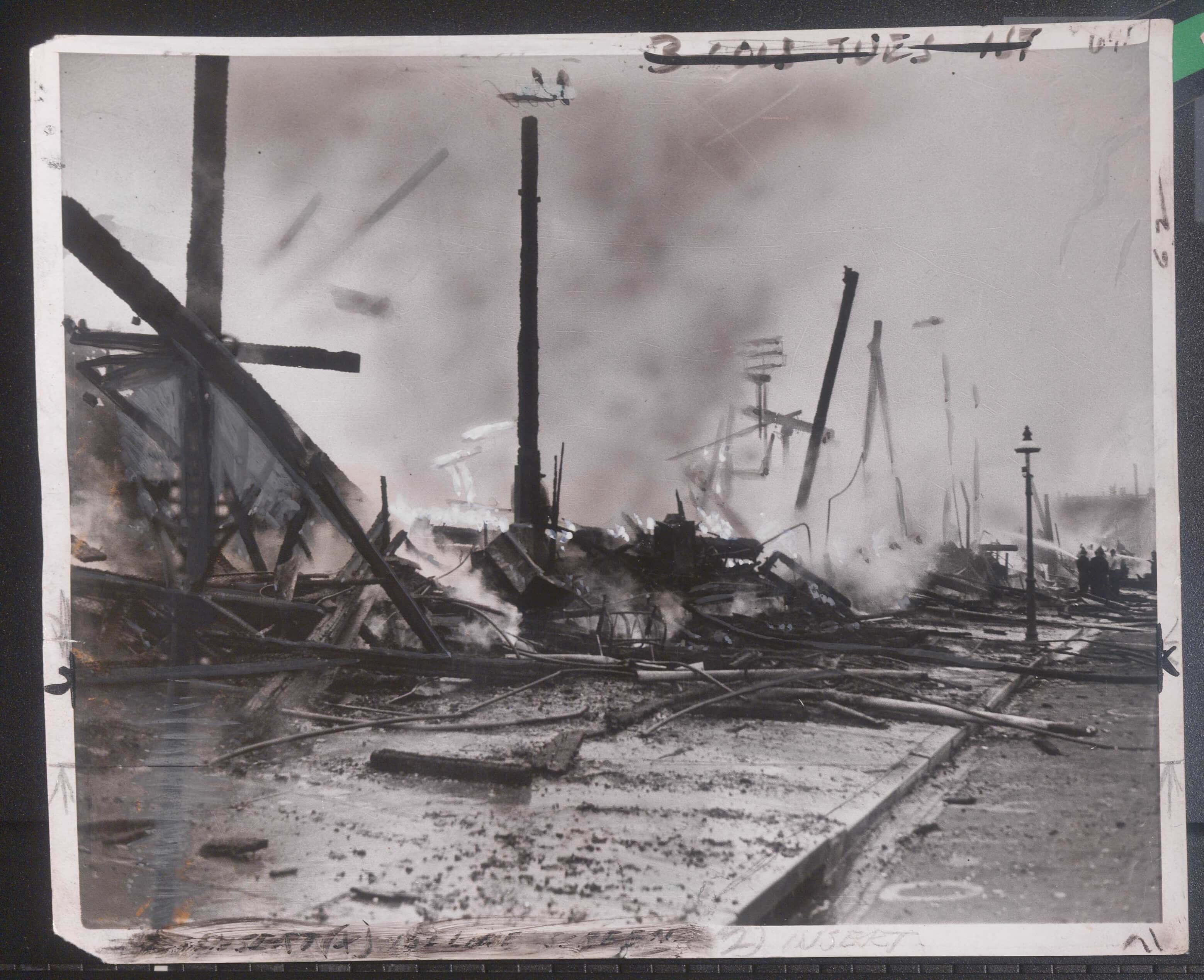
Baltimore didn’t have a major league team from 1903 to 1953 after the American League Orioles moved to New York, eventually becoming the Yankees. The minor league Orioles played at American League Park from 1901 through 1915 and at Terrapin Park, also known as Oriole Park, from 1916 to 1944.
Terrapin Park, like most ballparks at the time, was built entirely of wood. The stadium at the northwest corner of what is now Greenmount Avenue and East 29th Street, burned down in July 1944.
The Baltimore Sun said of the ballpark’s destruction, “The wooden stands burned so rapidly that within little more than an hour only charred and smoking timbers remained around the field where Jack Dunn once led his Orioles to seven straight league pennants, and where he developed such famous stars as Babe Ruth, Lefty Grove, Joe Boley, Tommy Thomas, Max Bishop and others.”
“It's one of those things where people who were alive in Baltimore at that time remember where they were,” John Eisenberg, a retired sports columnist from The Sun and author of “From 33rd Street to Camden Yards,” told the Shirley Povich Center for Sports Journalism.
Terrapin Park stored all of the Orioles' most significant artifacts in offices underneath the stands. From the team’s trophies — the club set a record with seven consecutive International League championships from 1919 to 1925 — to old-school uniforms and bats, none of it was salvageable.
Club officials estimated a total loss of $150,000, according to the book “Baltimore Baseball.”
“The fire of 1944 destroyed the entire archives of Baltimore baseball,” David Stinson, a Baltimore-based baseball historian and member of the Society for American Baseball Research (SABR), told the Povich Center.
Although the inferno's origin was never officially confirmed, multiple sources said a loose cigarette ignited the wood. Eisenberg said the Orioles’ opponent, the Syracuse Chiefs, were staying at the venue, not a hotel, and had to evacuate.
It wasn’t the first fire at a Baltimore ballpark. The grandstand and clubhouse at Union Park, built in 1891 as the third Oriole Park, burned down in 1895 before being rebuilt later thatyear. After the devastating end of Terrapin Park, Baltimore stadium construction shifted from wood to concrete and then brick and steel.
Segregation plagues Baltimore baseball
For much of the Orioles’ early history, Baltimore was segregated. Seating at Terrapin Park, like other venues in the city, separated Black and white fans, Seth Tannenbaum, an assistant professor of sport studies at Manhattanville University, told the Povich Center. Tannenbaum said stadium policies relegated Black fans to corner outfield bleacher seats — not connected to the rest of the stadium — while white fans could sit there or in the grandstands.
Still, Black people filled segregated sections, which gave them a sense of safety from raucous white fans, Gerald Early, professor of African & African American Studies & English at Washington University in St. Louis, told the Povich Center. While Black people enjoyed entertainment venues in their own neighborhoods, they were heavily restricted from attending ones elsewhere, Early added.
“Black people's lives were so much more restricted. … [Attending a baseball game] was an important social thing for Black people to do, an important entertainment thing for Black people,” he said. “Their options were more restricted than white people's options were.”
Unlike today, there were separate entrances for bleacher seats, with those sitting in them unable to access grandstand amenities. Fans could not walk endlessly around stadium concourses as at modern ballparks, Tannenbaum said.
Spectators contributed to the racial divide, too. Jackie Robinson, an African American who in 1947 would integrate the major leagues, played as a member of the Montreal Royals, a minor league team, at Municipal Stadium in 1946 — where the Orioles moved eight years later to a rebuilt Memorial Stadium — and was hassled by fans upon arrival.
According to SABR, fans hurled racial remarks at Robinson. He finished his first three games in Baltimore with two errors and just two hits in 10 at-bats in the most inhospitable environment he played in that season. Rachel Robinson, Jackie’s wife, said Baltimore fans “engaged in the worst kind of name-calling and attacks on Jackie that I had to sit through.”
Said Eisenberg: “It was terrible, terrible black eye for the city, very embarrassing. It was a pretty racist place.”
Jack Dunn, the owner of the Orioles, prohibited the Baltimore Elite Giants, a Negro League team, from playing at Terrapin Park until 1938, Tannenbaum said. When the Giants gained access to the stadium, spectator segregation policies did not exist at Negro League games. About 20% of fans at Giants games were white in the late 1940s, according to “Baltimore Elite Giants,” by Bob Luke, a history of the team published in 2009.
Women were allowed at Orioles games but attended less often than today.
The Orioles encouraged women to attend games at Union Park, American League Park and Terrapin Park, all of which featured ladies' days, Stinson said. On these days, it was typical for ladies to enter the ballpark for free or at a reduced rate. The lower deck was a covered grandstand, supposedly to foster a more comfortable environment, especially for women.
According to “Baltimore Baseball,” a history of the city’s ballparks and teams starting in the 19th century, published by SABR and edited by Bill Nowlin, American League Park, on the southwest corner of Greenmoun and 29th, held a Ladies’ Day in August 1901, which was considered a “great success.” In the book, a quote from The Sun said, “The ladies stand presented a very pretty picture yesterday,” with 2,566 female fans reportedly in attendance.
The experience of attending a game
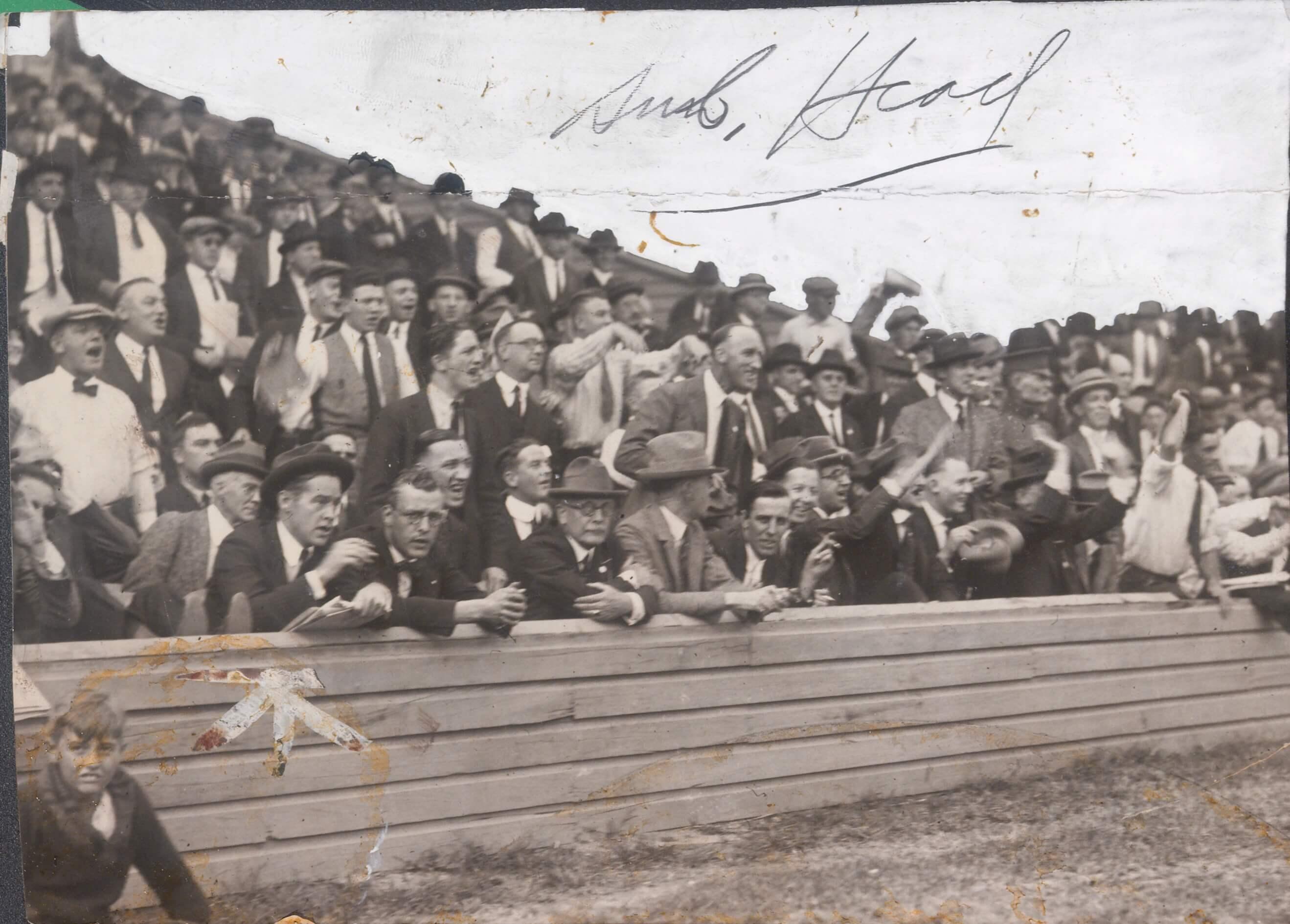
Baseball was primarily a middle-class sport, historians say. Working-class people typically couldn’t attend during the week, since all games took place in the daytime until the 1930s. Blue-collar workers had little control over their hours, making attending games virtually impossible. Baseball games were also almost exclusively scheduled from Monday to Saturday, as Sunday baseball was illegal in some states until the 1930s, Tannenbaum added.
“A lot of working-class jobs in the beginning of the 20th century … probably a lot of the jobs that Black Baltimoreans had, were at least six days of the week,” Tannenbaum said. “Only day games, six days of the week — there's just no way to go with any regularity.”
The majority of men donned top hats and collared shirts, as seen in most baseball pictures from the early 1900s. Pictures from these old parks showed little boys wearing collared shirts and ties and women sporting dresses and big hats.
Tannenbaum said stadium food focused on hot dogs, popcorn, peanuts, water, soda and beer.
Peter Coolbaugh, president of SABR’s Baltimore/Babe Ruth Chapter, told the Povich Center there was no in-game entertainment such as T-shirt tosses, races around the warning track and giveaways — staples of modern ballparks. Snacking and keeping scorecards were common at games.
“The Baltimore Orioles seemed to be the place to go … an Entertainment Central,” Coolbaugh said.
Stinson described American League Park (Oriole Park IV) as “loud and boisterous and muddy.” At Union Park (Oriole Park III), fans packed Baltimore’s first double-decker park. The first game of the 1894 season saw 15,000 spectators crowd into Union Park, which sat only 9,000 people, according to “Baltimore Baseball.”
Spectators who didn’t have a seat watched from the outfield grass. Rows of fans standing in front of the outfield fence were a common occurrence at old Baltimore ballparks. The front row of fans stood behind a thin rope and if the ball bounced to them, it was scored as a ground-rule double.
While fans standing on the field and affecting a game is unheard of at Camden Yards, it was one of many distinct elements at the old Baltimore ballparks.
Timeline of Orioles home ballparks
- Oriole Park I: 1883-1888
- Oriole Park II: 1889-1891
- Oriole Park III (Union Park): 1891-1899
- Oriole Park IV (American League Park): 1901-1915
- Oriole Park V (Terrapin Park): 1916-1944
- Municipal Stadium: 1944-1953
- Memorial Stadium: 1954-1991
- Oriole Park at Camden Yards: 1992-present