
Design & Construction
A ballpark would be built in downtown Baltimore. Facing time and monetary constraints, planners fought to make it feel both fresh and as if it had been in the neighborhood for generations.
Orioles wanted a ballpark, not a stadium
The new Orioles home should look retro, but what did that mean? Keep the warehouse? Steel or brick? Four levels? Three? Architects and designers had to decide while keeping the project on budget.
The original plan for this park, you know, when HOK came in with the original drawings for this park, I think it was just another one of your typical flying saucers being set down in the middle of Baltimore City. It was the Orioles who said, ‘No, we’ll show you how to build a ballpark.’
Paul Zwaska, former Orioles groundskeeper
Stealing home
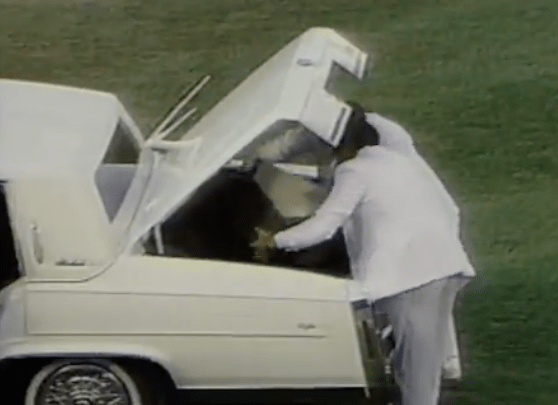
The Orioles said goodbye to Memorial Stadium after the last game there with a surprise appearance of the team’s veterans, a ceremony that left fans in tears. And then home plate took a limo ride to Camden Yards.
Naming the ballpark
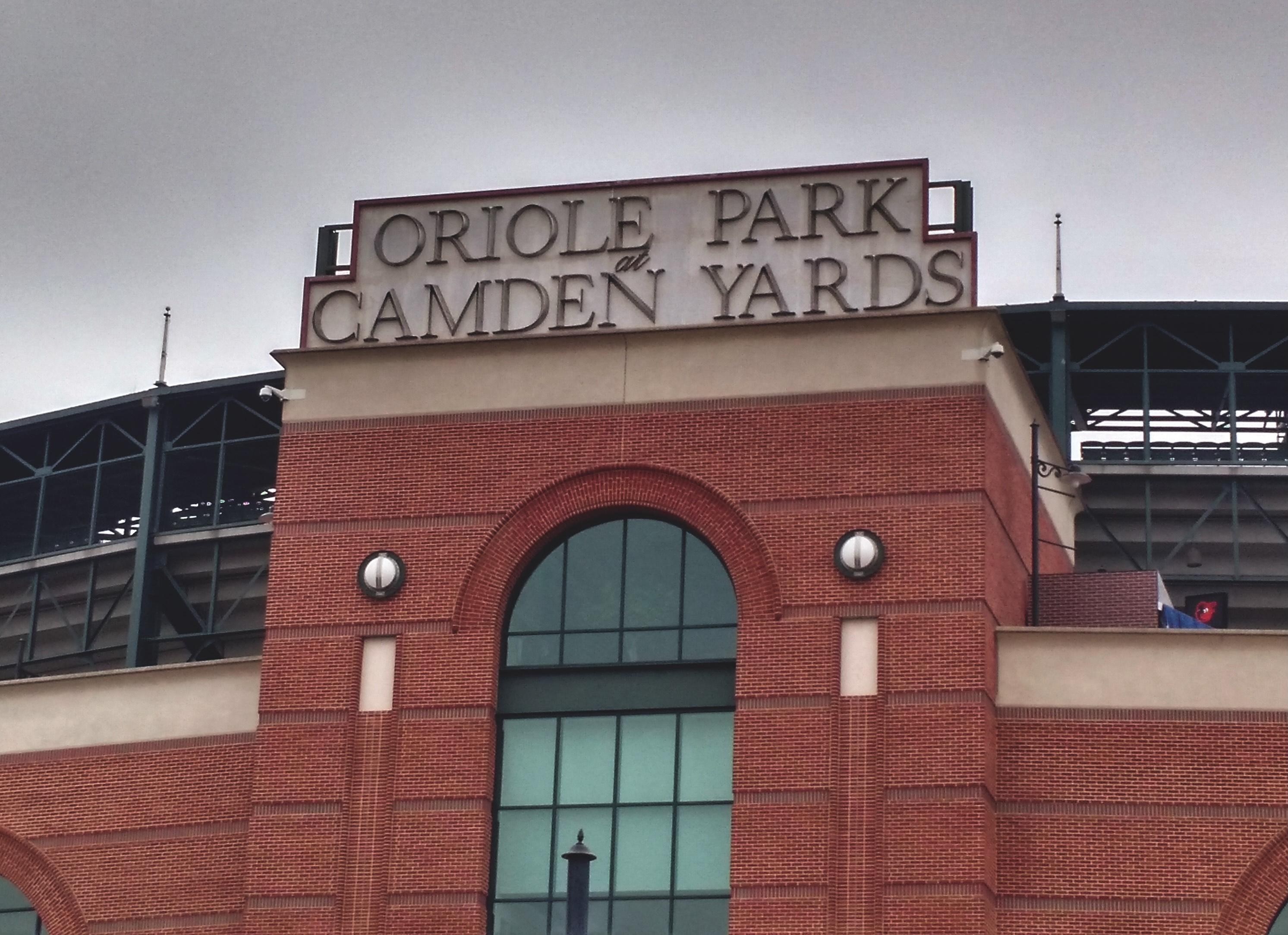
Oriole Park? Camden Yards? The club’s new home was a compromise made possible by a preposition.
Once, Babe Ruth’s father ran a tavern
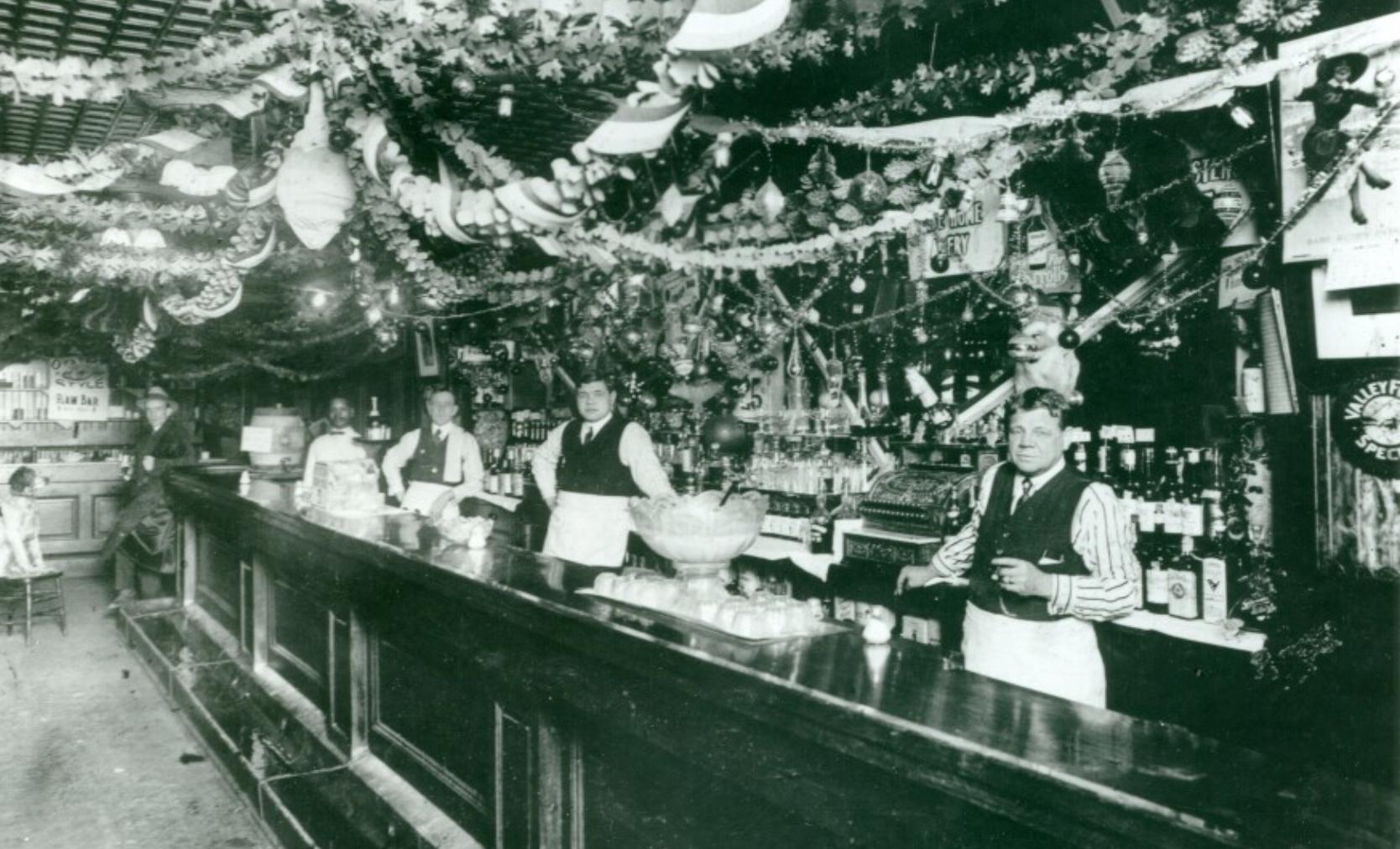
The Ruth family’s saloon long ago stood where second base is today. Archaeologists dug up artifacts, took photos and spoke to the Babe’s sister about life back then.
Inside the story
On the importance of the ballpark fitting into the neighborhood
“You look at Ebbets, Shibe, Fenway, Wrigley: They were good urban buildings. They followed the rules of a good urban building of, you know, a street wall sitting parallel to the sidewalk, of activity on the street, not just closing their doors and being dead to the world when there wasn't a baseball game.”
Janet Marie Smith, former Orioles vice president of planning and development
On resolving differences on how to build Camden Yards
"The Orioles came with their attorneys, the MSA came with their attorneys, and we were talking about the club and suite level. And the two sides' attorneys got into a conversation, or debate, if you will, about [there being] one wall of the toilets on the club level [that] would have tile to a certain height. This went on for a few minutes, and one of our guys finally said, ‘You're charging $350 an hour and there's four other attorneys here. I'm pretty sure we could have paid for the tile if you didn't bill the clients for this argument.’"
Joe Spear, former senior vice president at HOK Sport (now Populous)
On keeping the B&O Warehouse
“In terms of creating an urban landscape, apart from the harbor, I think keeping the warehouse was absolutely the right decision. But again, is it the most effective, efficient from a business perspective, no? Is it a beautiful piece of saved architecture, yes?”
Robert Wyatt, former construction manager and project executive for Barton Malow
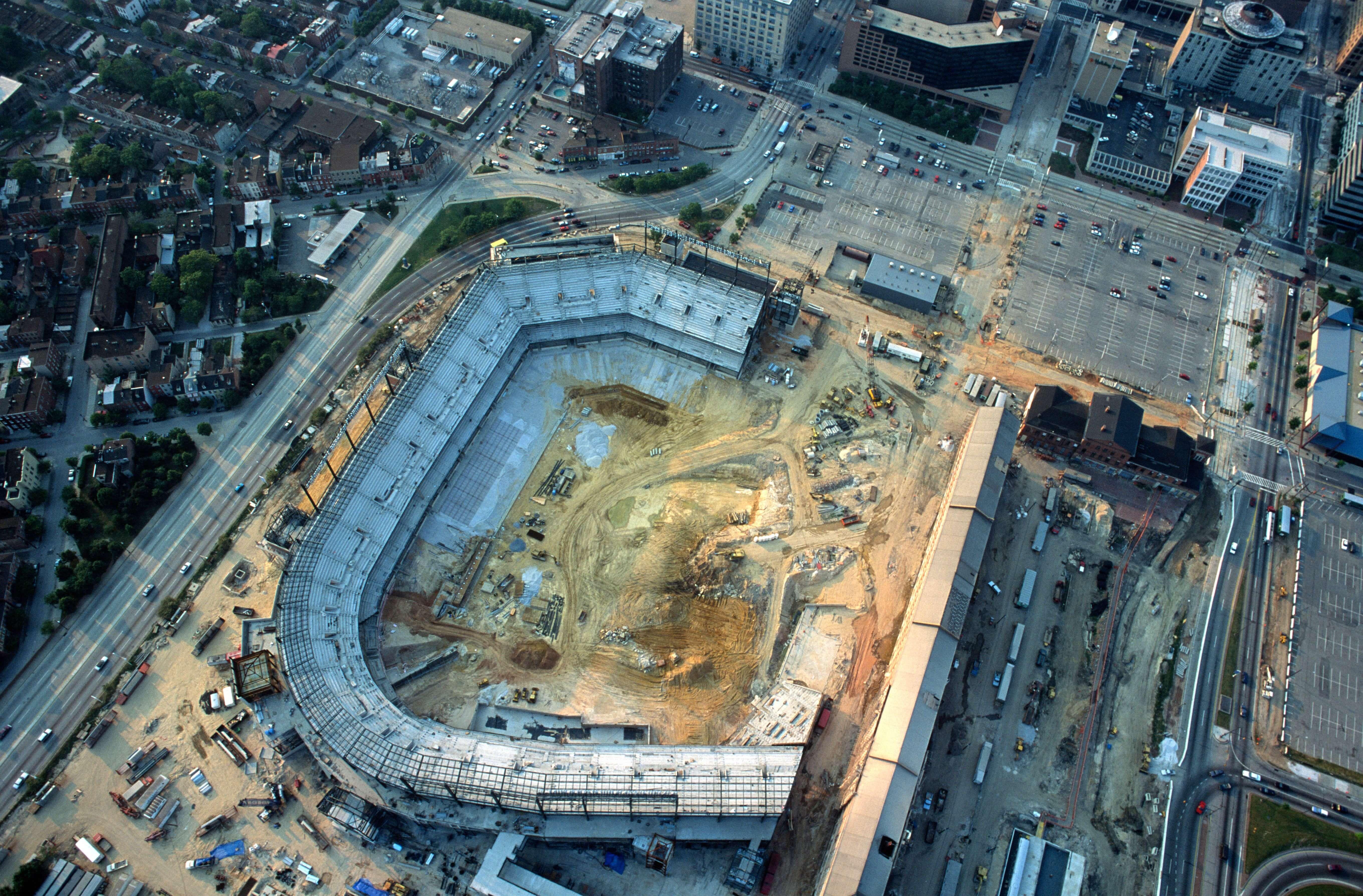
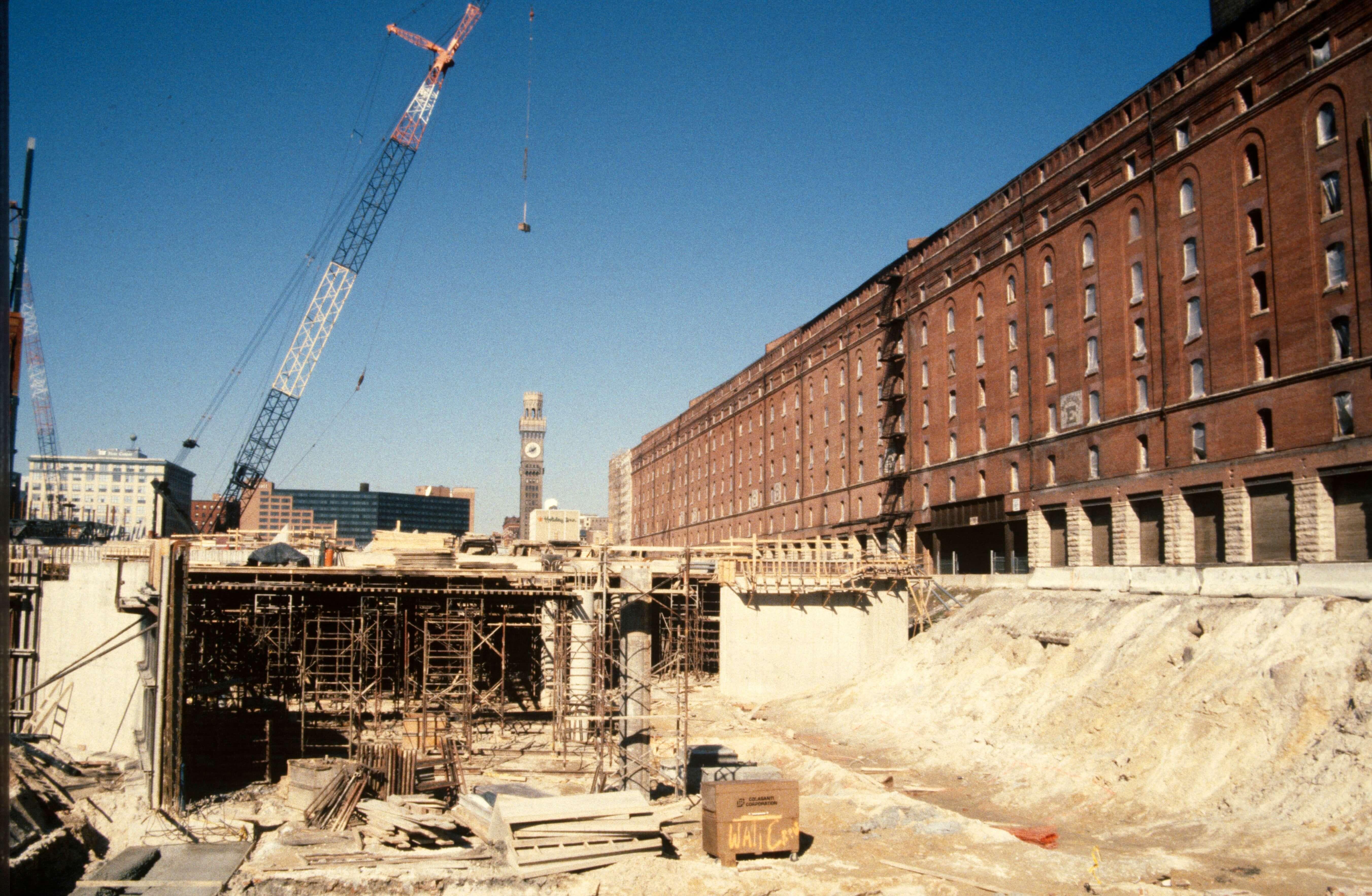
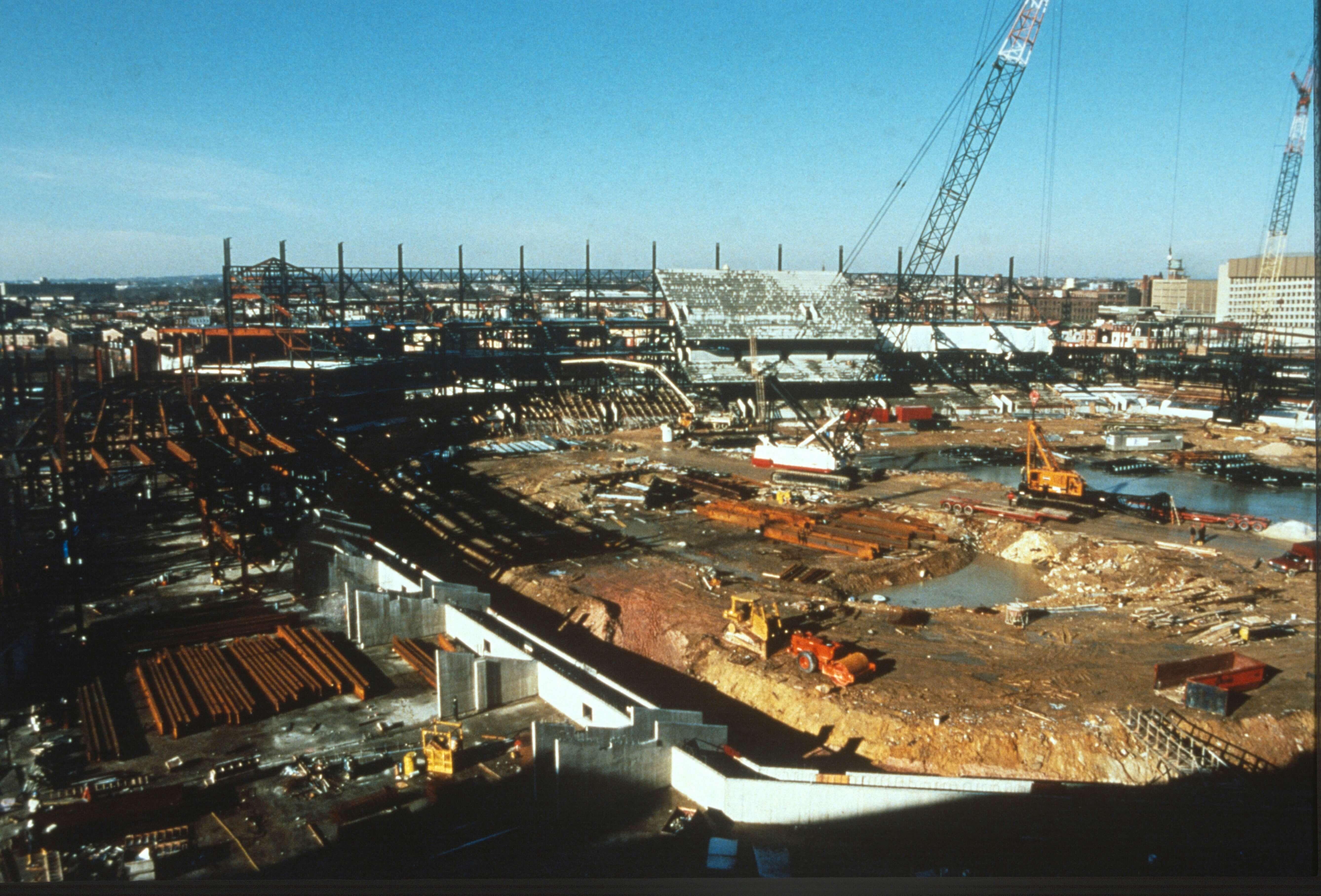
A view from above Camden Yards before the playing field had taken shape.
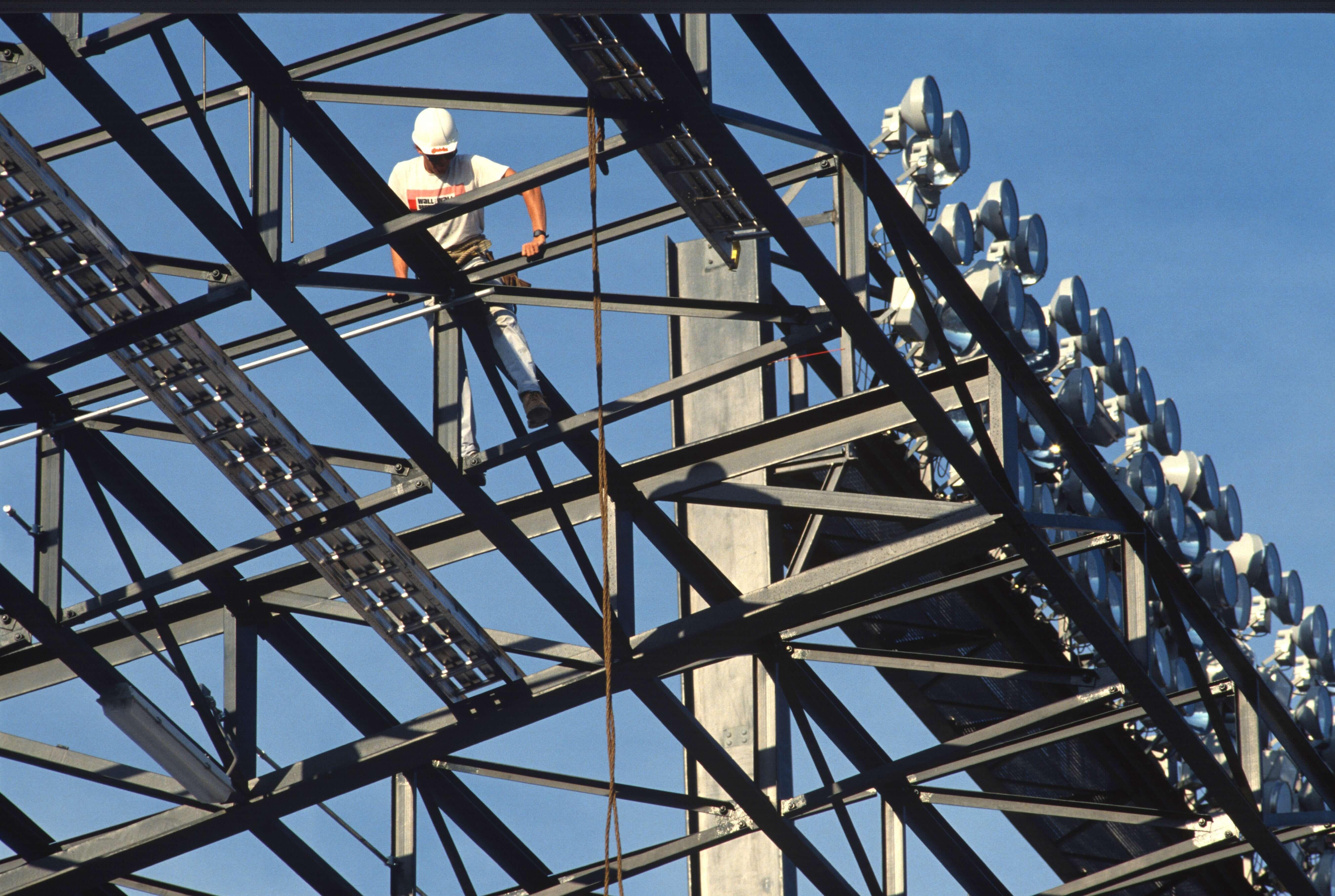
A construction worker prepares for installation of lights above Camden Yards.
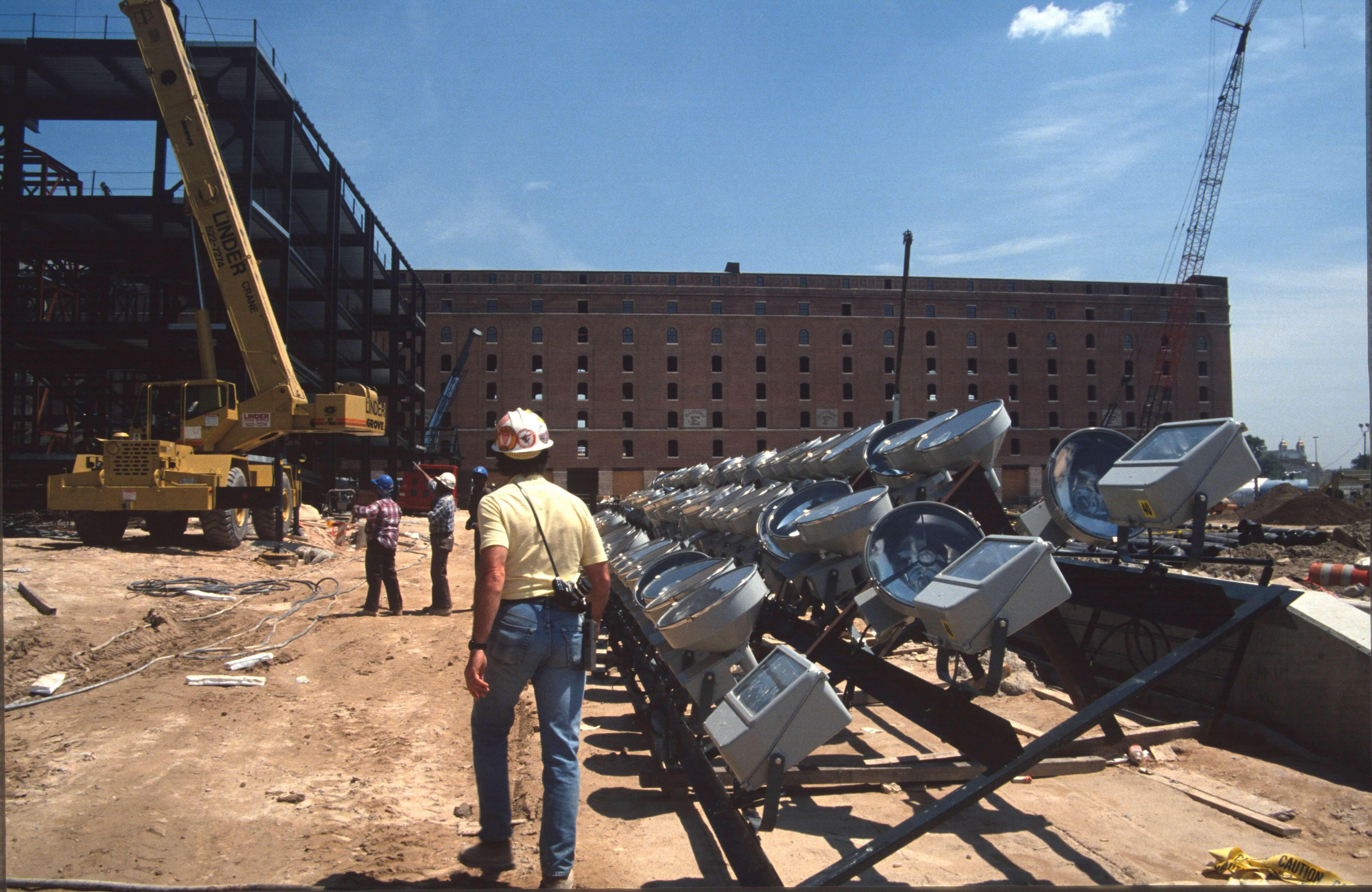
Light fixtures are readied to be hoisted into place atop the ballpark as work continues on renovation of the B&O Warehouse.
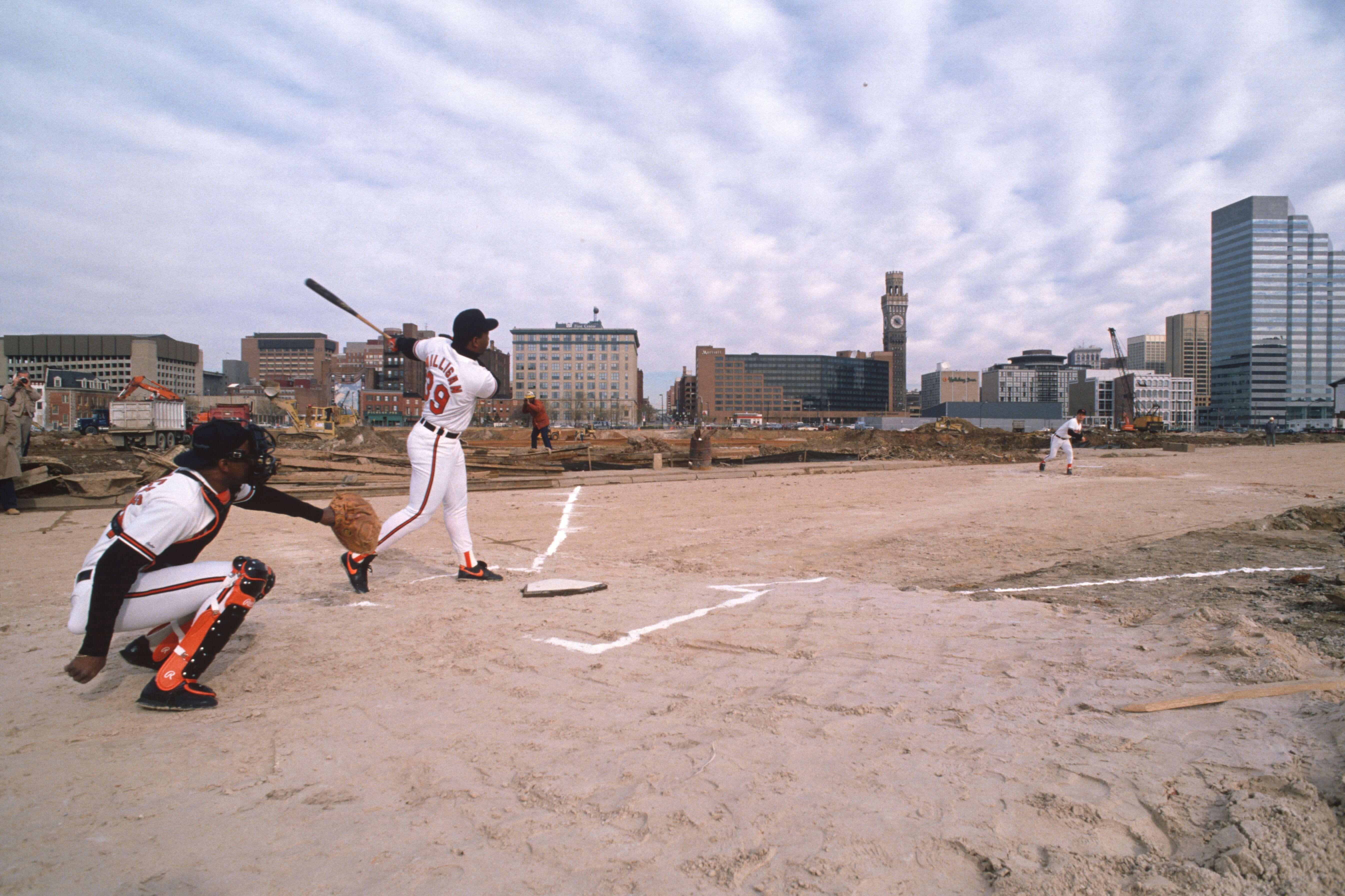
Orioles first baseman Randy Milligan takes early batting practice at Camden Yards as teammate Gregg Olson Olsen throws from a makeshift mound.
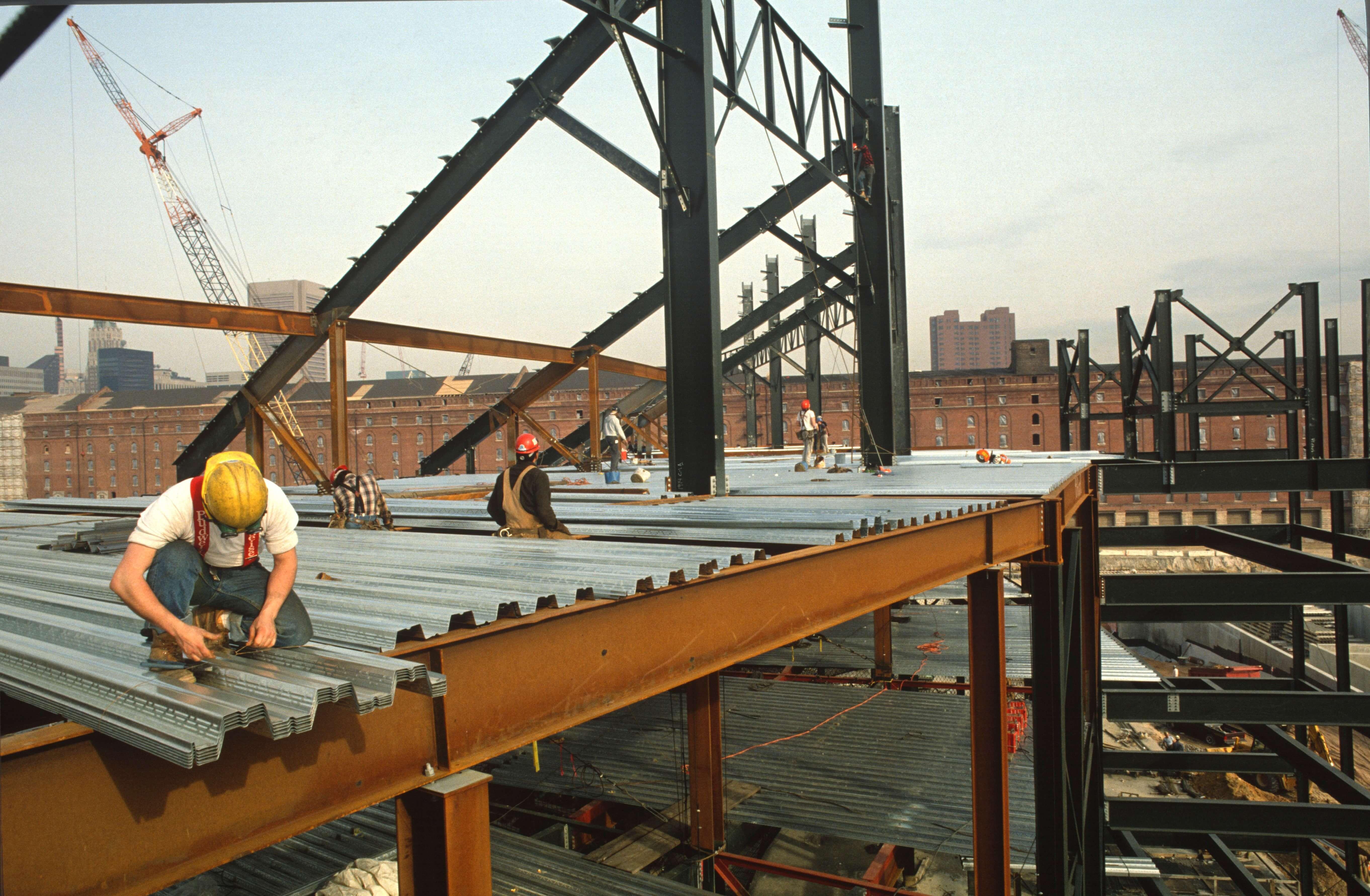
Workers install metal decking on the ballpark's upper deck as Camden Yards begins to take shape.

[The B&O Warehouse] was a big freaking mess. They had horses in the south end that they used to pull those carriages through town. They had peed so much on the floor and stuff. It was rotten. It stunk. Half the windows were broke. The roof was a mess.
Bruce Hoffman, former Maryland Stadium Authority executive director
Watch the interview
Ballpark numbers
Before a ballpark appears, a bakery, a school and more disappear
By Laura Van Pate
When Baltimoreans in the 1980s passed by the properties just west of downtown, they’d have seen a junior high school, a sausage company, a food wholesaler and more. Now, they’d see Oriole Park at Camden Yards
Cast of characters
In this act.
JANET MARIE SMITH
Former Orioles VP of planning and development; architectural designer
LARRY LUCCHINO
Former president of Orioles, Padres and Red Sox
HERB BELGRAD
Former Maryland Stadium Authority chairman
FRANK LUCCHINO
Former judge; brother of Orioles President Larry Lucchino
ALAN RIFKIN
Former chief legislative aide to Gov. William Donald Schaefer
MARK WASSERMAN
Former chief aide to Baltimore Mayor and Gov. William Donald Schaefer
BRUCE HOFFMAN
Former Maryland Stadium Authority executive director
JOE SPEAR
Camden Yards principal architect; Populous founder
DAVID ASHTON
Graphic designer
PAUL ZWASKA
Former Orioles groundskeeper
BOB AYLWARD
Former Orioles vice president
ROBERT WYATT
Former Barton Malow construction company senior VP
DAVID IANNUCCI
Former chief legislative officer to Gov. William Donald Schaefer
JON MILLER
Former Orioles play-by-play broadcaster; Major League Baseball announcer
PREVIOUS: Playing the political game
A jilted Baltimore mayor was now governor, determined to convince skeptical legislators to let him build two stadiums to keep the Orioles in town and attract a new NFL team.
NEXT: Opening Day 1992
Oriole Park threw open its gates to rave reviews and adoring fans, an old-fashioned ballpark with modern amenities that became a template for architecture, design and urban revival.